When I read the first few pages of Amy Tan’s masterpiece, The Joy Luck Club, I saw not words but my own family’s story reflected back at me. A Chinese immigrant brings a swan to the US, only for officials to take it away, and leave her with nothing but a feather symbolizing her hopes for her daughter. She waits to explain this to her child in “perfect American English,” only to watch her daughter—her American Dream—drift farther away from tradition.
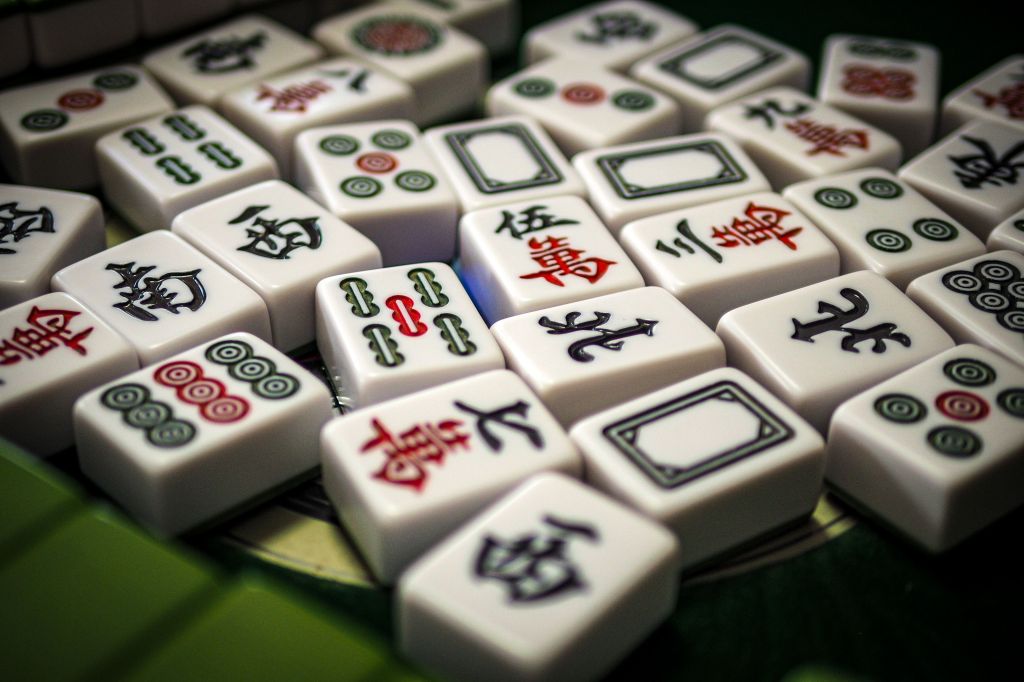
Poignant and resonant, Amy Tan weaves vignettes from four different mother-daughter pairs. Tan beautifully stitches the mothers’ stories of growing up in China. Some are forced into arranged marriages. Some speak with the mysterious Moon Lady. Some flee the Japanese invasion of China and suffer tremendous loss. Meanwhile, Tan deftly sews the daughters’ stories of growing up in America. Some become chess child prodigies. Some date white boyfriends who humorously misunderstand Chinese culture. And at the center of it all is the Joy Luck Club: a group of Chinese immigrants that convene regularly to play mahjong.
The author provides an intriguing exploration of independence versus obedience: daughters, through chasing their own American Dream, crush their mothers’ hopes. They decipher their mothers’ love as cultural superstition and criticism. They don’t yearn to hear about their mothers’ girlhood in China and thus the mistakes their mothers hope they will avoid. Indeed, with only raw facts and no maudlin blabber, The Joy Luck Club is hauntingly real.
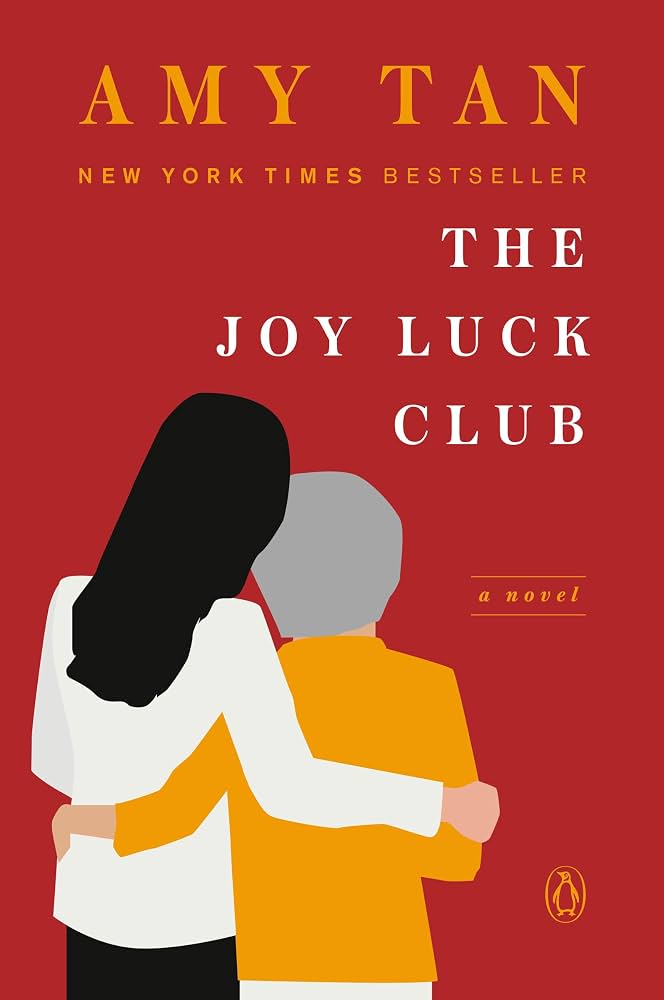
Image Credit
Fig. 1. Kathy Kim, Elizabeth Yaffe, & Roseanne Serra, The Joy Luck Club Cover, 2019.
Conversely, there are a few minor shortcomings. Most of the vignettes, though told from different perspectives, possess the same voice. At times, I could not tell whose vignette it was. Being lost in a maze of similar characters hindered my enjoyment. Furthermore, there are not enough interactions between each mother-daughter pair. Each one feels like a severed patch of the quilt—though pretty individually, they would be beautiful stitched together. Tan missed a chance to delve into the nuances of the Asian American experience.
On the flipside, mahjong was a potent motif. A Chinese table game, it connects immigrant women in their struggle to realize their American Dreams. It is a piece of their identity. However, Tan should have provided an Author’s Note or equivalent front/back matter to explain Chinese traditions. Many of them are tossed into the text like pebbles. Not only would an explanation make the book accessible for non-Chinese readers, it would prevent exoticization.
On a brighter note, I particularly admire Tan’s intertwining of femininity and culture. In early 20th century China, arranged marriages were common. Girls were often sold as brides. A Chinese woman utilizes superstition to cleverly escape an arranged marriage. Fast forward to the late 20th century, an American-born Chinese woman submits to receiving a smaller salary at a firm she co-founded with her husband. Perhaps she passively accepts the stereotype of the “quiet Asian girl”. Thus, the author’s focus on mother-daughter pairs explores a unique aspect of the Asian American experience that needs a brighter spotlight.


Leave a Reply